.png)
The Profitable Creative
Hey, Creative! Are you ready to discuss profits, the money, the ways to make it happen? The profitable creative podcast is for you, the creative, how you define it. Videographers, photographers, entrepreneurs, marketing agencies. You get it. CEO of Core Group and author Christian Brim interviews industry experts, creative entrepreneurs and professionals alike who strive to be creative and make money at the same time. Sound like you?
Tune in now. It's time for profit.
The Profitable Creative
Creators Gone CAB
Use Left/Right to seek, Home/End to jump to start or end. Hold shift to jump forward or backward.
PROFITABLE TALKS...
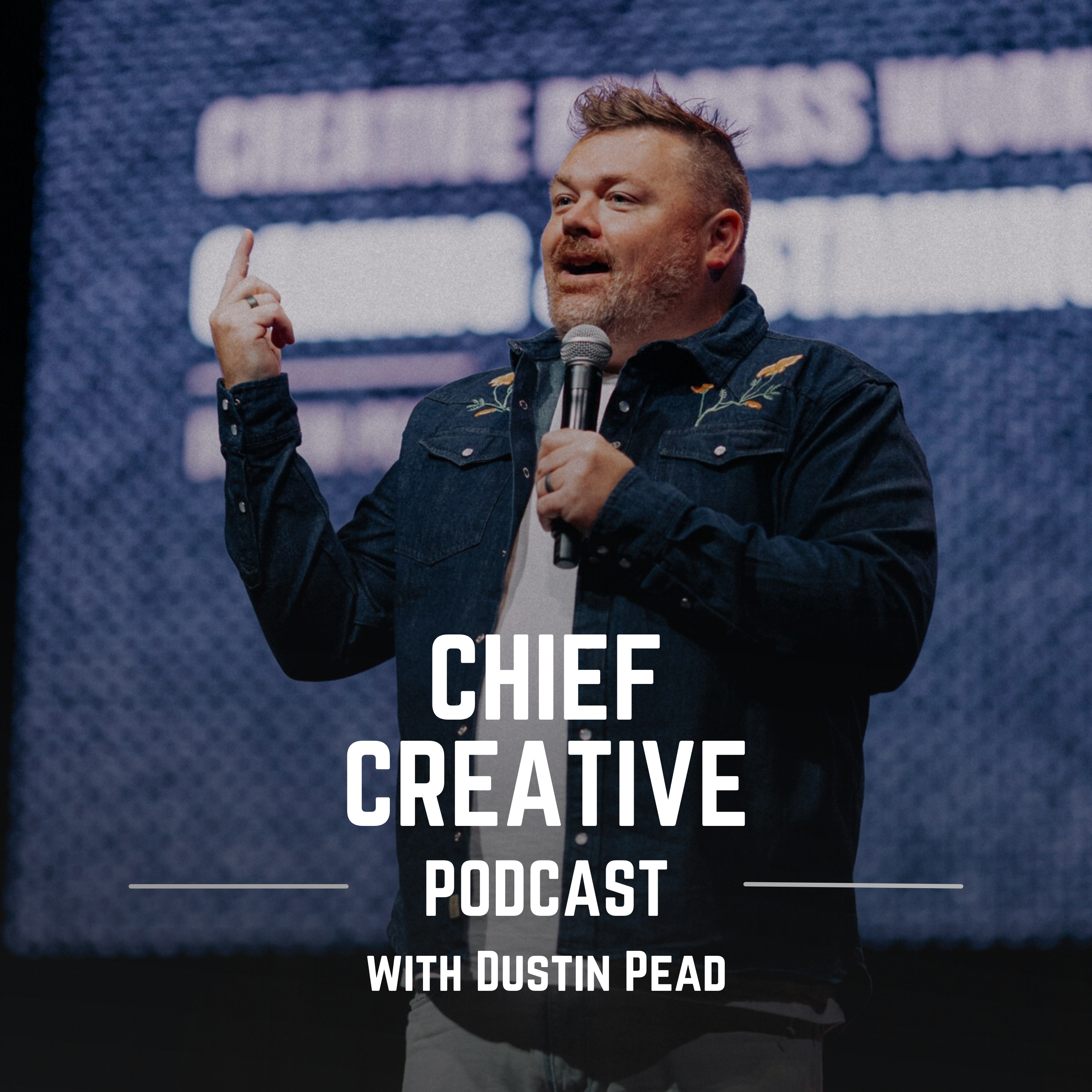
On this episode of The Profitable Creative, host Christian Brim brings you inside a live, in-person client event recorded in Oklahoma City—featuring a panel of creatives and entrepreneurs including Dustin Pead, Daniel Noriega, Scott Halverson, Nick Turske, Kyle Thomas, and Randy Kemp.
Together, they share real, unfiltered insights on business, relationships, and the future of AI.
From sales strategies to client retention, and from personal growth to mental health, this conversation dives deep into what actually drives success in today’s creative economy.
One theme rises above the rest: the human factor.
In a world increasingly shaped by automation and AI, this group explores why connection, intuition, and genuine relationships are becoming more valuable—not less.
PROFITABLE TAKEAWAYS...
- Human connection is the ultimate differentiator
- Curiosity and asking questions make you more engaging
- AI lacks context, judgment, and intuition
- Experience builds intuition that AI can’t replicate
- Client retention comes from thoughtful, personal actions
- Your presence and energy matter as much as your skills
- Business growth is tied to personal growth
- Community helps overcome isolation and imposter syndrome
- The human experience is at the core of everything
Join our community of creative entrepreneurs and get a free copy of our No-BS Guide To Making Your Creative Business Actually Profitable delivered straight to your inbox. We’ll share smart, simple tips to help you keep more of what you earn—no boring accountant talk, we promise.
https://bit.ly/4uCmlX2
0:00
So, like, something that I do intentionally, it's like, it's called, like, the question games, like, Oh, what do you do? Like, oh, I do this. Like, Oh, do you like it? That's interesting. What's that about? And when you do that for 15 straight minutes with anybody, you're automatically one of the most interesting people in the room. Like, why is this guy so interesting? Well, it's because you just talked about yourself for 30 minutes. Welcome to another episode of the profitable creative, the only place on the interwebs where you will learn how to turn your passion into profit. I am your host. Christian brim, recently, we had a in person client event here in Oklahoma City, and we had a few of our clients gather around, and I took the opportunity to record some of our conversation and publish it here on as a podcast episode. So included in this panel are Dustin pede, Daniel Noriega, Scott Halverson, Nick tursk, Kyle Thomas, and Randy Kemp and I apologize already for the audio. Randy did the best that he could with the room that we were in. So the audio is not up to par, but I think the content is brilliant. We talk about everything from sales to AI to growing your business to
1:16
managing your personal network and the importance of that human connection. So take a listen and hit us back with some comments. I feel like a big thing we talked about in the end, when I was talking about the industry changes is personality and how we interact as people more than the skills or knowledge we offer.
1:35
Okay, so what would that?
1:39
How would you define that?
1:41
In this particular instance, for me, or what some of us were talking about, is like
1:49
presenting, or being able to present
1:53
yourself,
1:56
and then if you're in the right room, the right place, people will see what you have to offer, that you have something to offer more than what you were hired for or what you were brought to the table for, and how that can nourish bigger opportunities, client relationships. Here's, here's, here's, here's a way I'm going to phrase this question, what was your biggest takeaway from today?
2:20
Because that sounds like so that wasn't okay. That wasn't actually my biggest takeaway, because I just think that's obvious to me. But we did talk about the human factor in all of our businesses. That human relationship that keeps people coming back to or keeps me somebody choose. Might choose you over somebody else is the relationships that you build and the
2:45
way you treat people
2:47
when you're trying to get their business and then afterwards as well. So it seems like that
2:55
I do think that I heard that a lot today is like,
2:58
treat people like humans. Treat people. Everyone has human experience, yeah, that that, that human factor can't be taken out of the business, and especially in a world where there's a lot of like, Oh, am I going to lose my job to AI, like, you still have to have humans in the mix, right? They're always got the time there, even if they're doing nothing. I assume you're these mics are hot. Thank you. Okay,
3:23
making sure. Okay, so this is the way, this is the way I'm
3:33
going to phrase that question. Then, so what is AI not going to change in your business. I feel like, honestly, I can kind of talk a little bit to both that as well as kind of bringing in a little bit of how I've almost intentionally organized our sales funnel. I always tell people I sell a year in advance, because part of my sales funnel is about reaching out to people who I just think are doing something interesting, saying, Love to grab a coffee or a drink, talk about them, and most of the time they don't even realize that I'm intentionally not talking about myself. So in that sales method, you know, like something like technology and AI, can list facts, it can list information. It can pull from information, but what it can't do is listen to the person, to the customer, to the buyer. So, like, something that I do intentionally, it's like, it's called, like, the question game. It's like, oh, what do you do? Like, oh, I do this. Like, Oh, do you like it? That's interesting. What's that about? And when you do that for 15 straight minutes with anybody, you're automatically one of the most interesting people in the room. Like, why is this guy so interesting? Well, because you just talked about yourself for 30 minutes, yes, and but they put you in that position now, and you do that without ever trying to sell them anything. You know. Try like, Oh, why do video production? I do this thing because, well, let me schedule me. Like, let's talk about projects you got. Like, have a drink. Talk about who they are. Leave. Mm.
5:00
Follow up. Say that was super fun, but to hang out again sometime in a year, that person now has a job, and they go, That guy was really fun. I really think he would be the one that might be helpful for this thing. That's the thing technology cannot do at any point they can't like if it did, if there was an AI bot that that's sad,
5:19
if you're sitting there by yourself talking to just your AI bot with a drink, and you're like, thanks. Ai bot is really sad. Some of those GPT commercials were kind of like that. Yeah, it was, it was bad. Oh no, it wasn't. It was claude's commercials about GPT, yeah, on the Super Bowl. All right, Kyle, what's AI not going to change for you?
5:41
I mean, I think when I think about technology, it comes down to that humans made the technology, and humans will always be humans at their core, they have other things to do outside of their job. And how can you connect with that human to make a relationship, whether it involves technology or not, I think everything goes back to our human experience, and that's what I focus on in my business, is to connect with the human first, because the technology is what it is, it's always going to advance. It's always going to change, but that human experience won't change, because whether the human is doing a job or not, whether we get to a point where we don't have to do anything because the computers are so smart, humans will still be humans, and if you can connect with them, then you have that relationship to build off of, whether that's work or friendship, that is always going to be the thing that leads you to the next thing, whether it's work or friendship, and that's what's really going to drive, you know, that relationship. So I always focus on the human first. As you said, I love that. It's like, when I get on a call with a potential client or something, I always look to like, whatever is in their screen, if we're on video, like, look in the background, big, oh, it's an interesting picture of your family,
7:00
you know, or just like, Oh, what have you been doing today? And then I mentioned kind of what I've gone on my life. It just takes on that barrier of, like, this isn't all about work. For me, I care about the human first.
7:12
Yeah, that's just human experience. That's the first and foremost for me. Always, if I don't get the job, that's totally fine with me. If they leave knowing that they had a good interaction, and maybe that will come back around.
7:25
Dustin, what say you?
7:27
Yeah, I was interesting in hearing the words human experience a lot today, and then obviously at the start of this as well.
7:37
Just back up to a story real quick. So when I was in college, I played with some full time scholarship
7:45
musicians. And I don't know if you've experienced this before when you're working with other creatives, or if you have ever like musician experience, or anything like that, I hear you play drums. So same allegedly, allegedly. So when I was with that group, we used to be able to communicate to each other, non verbally, just by looking at each other. Or someone with the lead, the lead would do something with their leg or their hand, or you could kind of sense this thing happening,
8:13
and at the end of the day, that's what people call me, like musicians intuition or artist intuition, got out of that got into a world where I was leading volunteer musicians and I was getting extremely frustrated because they didn't have the same intuition. And what I realized after several years of getting it wrong,
8:37
was that the difference was that they didn't have the same experience.
8:42
Not only that I did, but the same experience together to be able to have that tuition to back up the band that I was with. We played together six times a week, plus two rehearsals. So no wonder we get ESP in this thing right across the stage, right, right?
8:59
So I think what technology is going to miss is the intuition that comes from the human experience. And I think that's what great creatives bring to the table. Is go. I sense something happening in the room right now. I sense something happening on set right now, and we need to pivot. AI's not going to pivot. They're gonna go, Well, this is the plan, right? And that's what we're gonna do, even if it's the wrong thing. Because in the moment, it needs to pivot. In the moment everybody has that moment, in the room, on stage, on set, post production, at the venue, we need to pivot, because this thing is happening and it's special. Ai can't do that. Like, like the creative can do it. I also think it's client retention too, which we talk, I talk a lot about with my clients.
9:49
It's that human connection of, like, what you were saying, Kyle, hey, I noticed that in the background, right? But what you do after you notice that, so what we train our clients to do is to take note of that.
10:00
Yeah, and then go, Oh, I saw it. See a picture of your daughter back there. What's that? Oh, she's eight years old. She's super into soccer. We hang up the call. My client sends them a eight year old girl soccer ball, right? That's giftology. If you haven't read that book, yeah, that that's, that's the, that's the human part, another human part
10:24
that AI might be able to pick up on, but they're gonna, but they're not going to be able to make the connection that humans can. And I think that's where we stand out.
10:34
I mentioned this on the podcast a couple of times. The best book I read about AI was a book called prediction machines, and it was the only book I read that was not written by a computer scientist. It was written by a couple of economists, and they this is all pre LLM, right. I think the book came out 1012, years ago.
11:02
But what they said from an economics, purely economic standpoint, when the cost of something goes down, the demand for it and its corollaries go up. So the example they used was, if the price of ice cream went down, the demand for hot fudge would go up because people are eating more hot fudge sundaes, yeah. And so in looking at AI, what happens when predictions become
11:33
free, which, you know, we even before llms, we had a bunch of predictions that were free. You know, Google Maps, Google search, you know, all of all of the algorithms. Yeah, you might have paid with your information, but, you know, they didn't have any hard dollar cost.
11:53
What is the demand for? The corollary? Well, they they came to the conclusion that the thing that was going to become in demand was context and judgment, and those things are inherently human that the AI can't deliver,
12:15
which I find fascinating, because it's it's A lot of what with the conversation we had today, it was, it's, it's not,
12:27
this is potentially wrong. The AI, the prediction flagging, this doesn't fit the pattern. It's, is that important?
12:37
Yeah, I mean, that's, that's, that's what the judgment in the context is
12:42
it's very good at saying, This is what should come next,
12:46
but it's not good at saying, is that important, and then what do we do with it?
12:51
Intuition, judgment kind of the same. Yeah, yeah. No, I think, I think so yeah. And I think that there's warmth in human connection that you're not going to get in AI. And so when you're on set, or in my case, like at a venue, working with
13:11
a couple, the family, the friends, there's a level of warmth that goes along with that judgment and intuition that makes people feel comfortable. As soon as people feel comfortable, my product's better. If people feel uncomfortable, my product sucks. So I really try to lean into that, like
13:31
finding connection, judging whether I have that connection, having an intuition about this situation, and then using my skills to, you
13:41
know, create what I do, but do it in a way that at the end of the day, people are telling me what a great job you did before seeing a single photo, people will review us and say one of my favorite parts of our wedding day was having this couple shooting our wedding, because it just made me feel so comfortable that's you were part of the experience, absolutely, but not in a way where I'm trying to take the spotlight, sure, but just supporting that makes them feel seen, heard, like making a judgment call onto what should be done right now, and also, like, do We need to step back a little bit and let these moments happen and not insert ourselves into that? So I think that it's going to be a long time before some robot photographer shows up at a wedding to take pictures, and often that's actually terrifying thought,
14:37
you know, but believe that Schwarzenegger showing up.
14:44
Daniel, do you have any thought on that? Yeah, I would say that my job is extremely technical, and on paper, it seems like aI should be able to handle the tasks that I do, and it do.
15:00
It is amazing to me that
15:03
I was able to realize and capitalize that my value is being a human on set and making human observations, treating people like people, actually setting a tone, a warmth in the moment, like i There are producers that will hire me because they say your presence will be perfect with this photographer, your energy will be perfect. I need you on this job for this photographer. That's just you can't accomplish that with AI. And
15:35
the majority of the jobs I do within an hour, two hours, someone on says, could be like so how long have you guys been working together? You guys always work together. We met an hour ago, right? You know, that's the human element I'm able to bring to my job to say that's the intuition that yes, we were Yeah, yeah.
15:55
You just understand immediately what goes next, yeah, or little, little things. I mean, it really is. I'm on set just scanning, non stop, right? And if there's a little Winston a photographer, are you, I haven't seen you had in water for a walk. Hey, persistent, you go get some water, right? Just like, how is AI ever going to do that? Right? And it makes people feel seen and taken care of and good. So you're keeping that that healthy
16:26
excitement of being there that day, all of us doing what we want to be doing that day, like AI is never going to be able to place
16:36
that. Hey, creatives. Delaney, Ely, here, I have a question for you. If you could pay yourself more,
16:43
why aren't you doing it for real? S Corp is an option for you, the creative entrepreneur, to move your business to the next level, to pay yourself more and to cut your tax savings down. Yeah, less money to the IRS. We want that, right? So why haven't you done it yet? What's going on? The reality is you probably have 50,000 questions in your brain. You don't know which way is up and down, and you're still too busy to do all those things, plus also create right? Well, the good thing for you is that core group is actually the place to be to get that S corp election rolling. Yeah, we have an assessment. Let's see if you qualify.
17:20
Come chat with me. Core Group turning passion into profit.
17:28
Okay, my next question is,
17:30
what was your best takeaway from today? I feel
17:37
like I can start with this a little bit, because it wasn't what I expected it to be. It's more that there's a lot more. Like, no matter where we are in the country, we're all kind of dealing with very, very similar things. Because I feel like, you know, I can speak from being in a very you call, like, a low media market, like, there's not, we're not Texas where there's just media hubs nearby. We're not Los Angeles where there's a media hub. It's basically just people who liked this decided I'm going to try and doing B to B direct stuff. So the fact that us in Michigan, which is very small media market, is dealing with the exact same issues as people in Texas, people in California, it's like just more the realization of it's the in the area geographically isn't what's defining the work and what's coming from it. It's the people who are successful at it are successful for the same reasons. Is what I'm feeling, no matter where you are. And that's kind of something I took from today.
18:33
Love it. Kyle, yeah. I mean, I came up with this idea because I just wanted to see and be in a room with people that cared about I think my first perception was finances as much as me, and how much core has supported me in creating a lot of stability in my business, and then that also created a lot of stability in my life. Just really has transformed everything I do and give me a lot of peace of mind. At night, I was like, I need to see who else is working with core, because I want to know how they're feeling about it. What kind of ideas do they come to the table with? And I was very surprised that that really wasn't what came from today, but more so, just that we are dealing with all the same things, but just able to connect. And maybe it isn't just, you know, that we care about our finances, but it was just like, you know, it's just our step in the journey, right? We talked a lot about today. Of you kind of start at a certain point, and then you kind of get to a certain level. And it was just really nice to be in a room where people are asking those same questions as you are, and that's what I think I got. The biggest today is like being in the room with people that are asking the same questions, maybe not necessarily caring about the same things, but we're all kind of working towards this thing of what's next? Yeah, I think, as I said earlier that I.
20:00
Uh, finances are, I mean, the numbers are a lagging indicator, right? They represent what's already happened. And
20:10
one of the things I don't like to tell people I'm a CPA, because they have this idea of what, okay, you're a CPA, therefore you are x so I don't like to tell people I'm a CPA, but
20:24
when they find out that I'm a CPA, they invariably say, Oh, you must love math, and my statement is no, no. I mean, I don't hate math. But
20:36
there's this misconception that accounting is math, accounting and finances is a language. It's more akin to a language, and you're talking about the Language of Business. And every business has a story.
20:52
The numbers are just the standard way of telling the story. Yeah. And so if people approach it from the standpoint of learning a new language, not to be fluent in that language, but to know enough to get by. I find creatives find that mindset shift a lot better to think of it in terms of language versus numbers,
21:20
and it's easier to grasp the concepts that way. But yeah, I guess I'm not surprised that we didn't talk a lot about numbers here today, because the numbers are the end. They're not the result of something else. Yeah, Daniel, what was your takeaway today?
21:42
You know, honestly, I would say
21:46
it kind of to reiterate this whole human aspect I love that I feel like everyone at the table today. It just always circled back to that. And I think it's important to realize that you have to invest in how to communicate better. What makes someone feel seen? I started, I don't know how long ago now, in Google Maps, I if I go to a restaurant, if I go to a bar, I'll write down my server's name in the notes in Google Maps, if I have a conversation with somebody, I'll add in my contacts, daughter, name, this, age, this, you know, and even if I don't know them that well, right? And that way I can refer to it later. It really makes people feel seen and considered, and I think we're all everyone here has realized that's a big part of
22:33
why we are successful, why we care about what we do, that that translates to us caring about the clients, and that's more important to us than the job, you know, I think that's really special.
22:47
Did already ask you what your biggest started? Yeah. Oh, okay, I think that for me, Scott, go ahead.
22:56
For me, I think that
22:58
you're constantly either growing your business or afraid that you're losing out, and so to have a positive mindset, like, what can we do to grow? And just some of the things that we were talking about earlier was like identifying the problem, like, how can we create a solution for that problem? Do the do our clients, our customers, even know what their problems are. Those type of questions are growth questions. They're not like trying to
23:30
claw backing losses. Yeah, and so having a conversation like this in a setting where it is a accounting firm, so tax, allegedly, yeah,
23:47
it's that support is there. I don't have to worry about whether or not all of those things are being taken care of. I can focus my time on client retention, getting new clients, like building my business. I would love to see growth. I feel like that my company, kind of, like, has hit a good spot and feels good, but maybe there's more. And so constantly trying to, like, look at opportunity and not worry about what's happening industry as much. And so for me, I think that just having
24:21
seeing the tools that you guys offer to give me that support to then look at what's coming down the road, instead of worrying about all the details, the numbers, the boring stuff, yeah,
24:35
is the takeaway that I'm coming from. I should lean into it a little bit more. You you talk about growth, and when you first said growth, I, for some reason, I was thinking personal growth, not business growth. Yeah,
24:48
I know you haven't listened to this podcast, so you probably haven't listened to my other podcast, the Chris project, where
24:56
that's a passion project and it's a.
25:00
A it's around entrepreneurial mindset and mental health, and we talk a lot about on that, how
25:09
entrepreneurship, business ownership is the ultimate choose your own adventure game.
25:16
You You get to pick what you do, and that can be absolutely wonderful and fulfilling. It can also be terrifying.
25:28
And what I found in my own journey is that the business growth is is
25:37
directly correlated to your personal growth. And in my situation, we reached a point several years ago where the business wasn't growing any further. And
25:50
our natural instinct as humans is to look outside of ourself for the reason for the problem, right? And so I think it's very easy to say, well, it's the industry, it's it's the economy as a whole, it's my employees, it's my customers. Like not ever looking back in the mirror and saying, what, what needs to change for me in order for this business to grow
26:19
and and and that was a huge inflection for me point. But I love what you said, Scott, because it's it is about being in these rooms and having these conversations and challenging yourself to ask those difficult questions. What was the name of your other podcast, the Chris project? But I'm not Chris. There's a lot of confusion on that, Chris was so I'll give you guys the 92nd story on the origin of this. I had a client 10 plus years ago. He had a manufacturing business, and he was in his 50s, very successful. A business really was going great, but he was burnt out, and he his solution to that. He was a self taught chemist. He manufactured paint stripper for the government. Okay, real exciting stuff, but he had a high school education. He taught himself chemistry, and he developed the chemical solutions for these products that he sold. And his solution was that he was going to hire a president to run the company, and he was going to literally go back to the lab.
27:27
He invited me on the interview for this President. And this this we went to lunch. I'd never met this guy. In the course of the lunch, this candidate proceeded to regale us with his stories of cheating on his wife with strippers,
27:45
which I thought a strange thing to leave in an interview, but whatever. So we leave lunch, and Chris, my client, he calls me and he says, Well, what do you think? And I said, Well, I think if he cheats on his wife, he'll cheat on you. Don't hire him.
28:00
Chris, in fact, hired him.
28:04
Fast forward a year, the president of the company gets arrested for trying to bribe a contract officer
28:13
and throws Chris under the bus. So it was all Chris's idea. Chris, I believe him, and he said I had no idea what was going on.
28:22
But in any case, he got sent to El Reno, Federal Penitentiary down the street for two years, the President walked.
28:32
I never talked to Chris before, after he went to prison, but a few weeks before he was scheduled to be released, he took his own life,
28:44
and that story haunted me
28:48
for a decade. I'm like, could I have said something? Could I have done something like what you know, but I realized with that 10 years of perspective,
29:01
what was really going on. He was burnt out, and he didn't know where to go with it. He didn't
29:08
know how to process it, and then, of course, getting arrested and all of that. I mean, like, he just couldn't I don't know what mindset he was in when he was in prison, but obviously it wasn't good.
29:21
I say all that to say that's why I started the podcast, was to have those conversations with entrepreneurs and other professionals
29:31
around those things that entrepreneurs don't talk about. You know, entrepreneurs want to talk about successes.
29:38
You get in a room, you know, a lot of times it's, you know, let's, let's talk about how great I'm doing. They don't want to say, My wife left me because, you know, I work all the time, or, you know, I don't have a relationship with my kids because, you know, I'm distant, any of those things. So that's why the Chris project, you.
30:00
I want to look it up. Okay, Dustin on the list, what was your biggest takeaway today? Yeah, I mean, I think it's interesting that
30:13
I'm going now after that story, and after hearing us talk about the human experience and different things like that. I've struggled with mental health my whole life, or wrote a book about kind of my journey through mental health in 2024 mostly just for my kids to have it in case something happened to me, I wanted them to kind of know, this is how I overcame and this is, you know, kind of thing.
30:35
But I think that
30:37
I know for me, and I know for a lot of the creators that I surround myself with we all struggle with imposter syndrome, and that sounds really servicey,
30:46
but I also think that it goes deeper into calling
30:52
and if I'm really supposed to be doing this or not, I think all of us have woke up on a Tuesday morning going, am I really supposed to be doing this or not? And so my biggest takeaway today was being surrounded in a room with what I believe are people who are still just trying to figure it out, like I am. And so it kind of just washes any trace of imposter syndrome out the door. I think the human experience. We talked a lot about this day in our conversations about like, Hey, how can we do more of this? Right? Community, yeah, community. And the reason is, is because we need to be able to, kind of like, rub shoulders with C and 4d
31:31
Hey, these are real people with real problems and real families and real, you know, blind struggles, who are just trying to make it in a similar fashion, with similar passions as we all do,
31:44
was the most encouraging thing for me is worth every penny to travel halfway across the country just to be able to sit in a room with people who are doing, doing and dealing with the same thing I'm doing and dealing with
31:57
I love that. I think entrepreneurship can be very lonely, and I
32:04
think creatives kind of suffer in a an additional way, and that there are a lot of people that
32:16
don't want to tackle the business side of it, like they just want to do whatever it is they do, and get paid and go on. But for those people that want to build a business, something that's sustainable, something that provides the lifestyle that they want, those are different conversations, right? And you need to have those conversations with those other people that are on that same journey, not the persons that's trying to figure out what, what equipment do I get? Or, you know, how do I price my you know, Services Well,
32:48
gentlemen, thank you very much for being here today and recording this podcast. Any last words? Anything anybody wants to say? Jeremy, you've been remarkably silent. I was trying to because I thought it was
33:03
these
33:09
guys. I'm good. All right. Appreciate it, though. We won't acknowledge Dorinda, who slammed the door on our way in. Yes, we're not going to ask what you had to think until next time Tada for now you.
People on this episode


Podcasts we love
Check out these other fine podcasts recommended by us, not an algorithm.

The Chris Project
Christian Brim